Liverystable.net Horse Blog Just another WordPress weblog

June 1, 2012

Horses and Spring Mud Do Not Mix Well

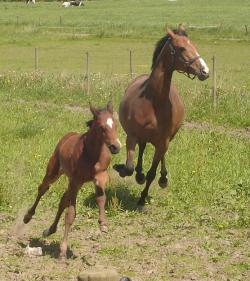
Running Mare and FoalThe weather has been odd this year, a bit of warm weather in February then a whole lot more cold right into the end of April. Nevertheless, spring has finally sprung, the flowers are blooming, and knee-high rubber boots are a constant companion. As the snow melts and creates mud fields in some areas of the country, other regions get their mud via deluges of spring rains. Either way, mud on a horse ranch is not a good thing. It’s inevitable, but definitely not good. Pastures become unusable for horses, grasses can’t be fertilized for better growth, which in turn means a gradual degradation of the pasture quality. On top of that, horses can develop serious injuries or diseases from being in a muddy environment.

Let’s first tackle the issue of pasture health and safety. On one of those early days when the sweet scent of spring is in the air, take a walk around all fence lines. Inspect every post for rot or shifting, as long months of snow and moisture can cause issues. Keeping the grassy pastures grassy is as important as keeping the fence posts up, which is why many horse owners choose to fertilize their pastures. Yet it is vital to wait for the ground to dry out before fertilizing, otherwise the effectiveness just drains away with the water into the natural environment. Also, never allow your horses onto a pasture immediately after fertilization. Keep the horses away for as long as the fertilizer manufacturer’s instructions specify.

The horses may be itching to get out into the pasture but if it is still muddy don’t give in! At the very least, the horse hooves will tear up the grass and make a real mess of the pasture. When the ground dries out, those ruts could cause injuries to horses later on. Have you ever stepped in a mud puddle and had your boot suctioned off your foot? It is humorous, and a little messy, but for a horse, it can be painful and damaging to the top the hoof. Horses that are permitted to graze a muddy pasture can also develop the dreaded mud fever, cracked hooves, and Equine Dermatophilosis.

No one can prevent spring rains or run-off from melting snow, but horse owners can work around the mud problem. In watering and shelter areas spread a healthy layer of wood chips or crushed gravel. Rain will drain off the surface and help prevent mud, even in the face of traffic from heavy horse hooves. Check gutters around all stables and outbuildings to ensure water drains far away from the horses. Horses and spring mud do not go well together, but good planning can mean they never meet!
May 24, 2012

Horses Are People Too

Horses Are People Too - Liverystable.net Horse BlogIt sounds like a cliché, but the World Organization for Animal Health (WOAH) has defined animal welfare in much the same language as the World Health Organization has defined basic human rights. According to the WOAH, the welfare of an animal is good if it is “healthy, comfortable, well nourished, safe, able to express innate behaviour, and not suffering from unpleasant states such as pain, fear or distress.” Food, shelter, safety, and the freedom to be themselves; isn’t that what every human strives for in life?

Considering the history and importance of equine in society, there has been relatively little research conducted on horse behaviour and training. Yet what little has been done shows a strong evidence that horses are intelligent, learning animals that respond very positively to primary positive reinforcement. Unfortunately, just because horses are animals they are usually subjected to negative reinforcement that causes pain, fear or distress, subsequently compromising the overall welfare of the animal.

Back in the last century (1989), the Journal of Animal Science published a report called “A Review of Learning Behaviour in Horses and its Application in Horse Training”. The research presented three main areas of findings: experiences early in a horse’s training and life will affect later learning; horses have long-term memory; long and intense training sessions decrease effective learning in horses. Short training sessions that include positive reinforcement, using food, garner far longer and more successful results than a single long training session.

So, positive reinforcement is the way to successful training, but that doesn’t mean punishment is out of the equation – it just needs to be done correctly. Punishment carried out incorrectly when training horses damages the animal, the lesson, and the relationship with the handler. There are two key points to effective punishment: punish within three seconds of the behaviour and do not escalate. The idea is to make the horse aware of the issue, but not instil fear, avoidance or a defensive response.

If we were to replace all the instances of ‘equine’ or ‘horse’ with ‘person’ or ‘people’, the above three paragraphs would still be relevant. Horses are intelligent, intuitive beings that can and will respond better to positive reinforcement than any other form of training – just like us. Just as we wouldn’t slap a child for crying, it is not appropriate to slap a horse for whinnying. Horses are as sensitive as humans are, and deserve the same humane training methods.

April 23, 2012

No Foot, No Horse – Modern Horse Shoeing

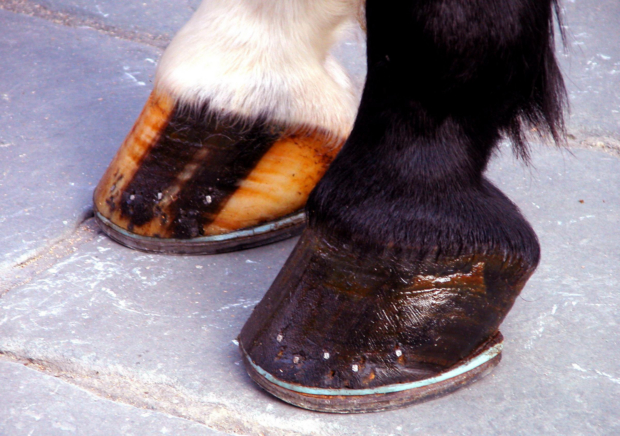
Horse ShoeingHorses have played a key role in various facets of human history. Having been used in situations and scenarios as varied as world wars, travel and exploration, agriculture and industrialization, horses have been a part of many important developments in the history of the human race as humans have relied upon them for servitude for centuries. While horses are one of the strongest and most resilient species of animal life on earth, they still needed a bit of human ingenuity in order to be able to handle the immense amount of physical labor they were often used for; it became apparent very early on that a horse would have more longevity if it’s hooves could be protected from wearing down prematurely – thus the creation of the horse shoe, born of necessity.

Some of the earliest known civilizations on earth had developed methods of preserving a horse’s hoof. Through various archaeological findings over the years, historians have been able to ascertain some rather crude methodology for hoof protection dating back to first century A.D. – animal hides and plants were woven together to form a type of crude boot that could be tied around a horse’s lower leg and protect their hooves in the process. It is believed these ‘horse boots’ were employed only when the terrain dictated the need for them and they were not permanently affixed. The Romans used a saddle shoe that was quite similar to the sandals worn by most people of the era, right down to the crisscrossing straps used to hold them in place.

Although the exact date of when metal shoes were employed is unknown, it is fairly certain that the practice began in the sixth century. Metal shoes – usually iron – were initially affixed to the hooves of horses to preserve their hooves from damage and premature wear from the great distances they walked while in the service of humans; they were also used to prevent slipping and erosion as horses were often pulling their load or carrying their rider across soft, damp ground. By the 12th century iron was a precious metal in short supply and was used to mint coins as well as to make horse shoes, for this reason it was permissible to pay taxes using horses when necessary.

The first farriers – horse shoe makers – appeared in Europe during the early 13th century, likely brought to Europe by William the Conqueror. Not long after, horse shoes became a large production item and an industry unto themselves. It was also during this time that the main use of horse shoes switched from being used primarily by royalty or cavalry to mainly being used by farmers and other trades. Pre-made horse shoes that were relatively easy to apply were now the norm.

Horse shoe makers became organized in the early 14th century. They became publicly and commonly known as ‘farriers’, a term first used to describe horse shoe makers in a trade manual titled “No foot, No horse”, that was published in 1751. Horse shoeing techniques and materials continued to evolve and eventually led to a technique in which the shoes were heated before application, or “hot shoeing” as it was known.

While horses are primarily a hobby and no longer a relied upon method of transportation or labor in most parts of the world, farriers still exist and horse shoeing is still a usable trade. There are schools that offer farrier courses and it is possible to become a professional in the field. Techniques continue to be improved and materials experimented with – for example, lightweight aluminum shoes were discovered to vastly improve the speed of racehorses; dense rubber was found to be more useful for the more sensitive hooves of trail horses, etc.

February 20, 2012

Introducing A New Horse

Introducing A New Horse To The Herd

Buying a new horse can be an arduous process – there are dozens of considerations to maintain during the selection process, not to mention all the time spent perusing horses for sale. Once you’ve made your choice and have purchased your new horse, the second part of the process begins – introduction of the new horse to your other horse or existing herd.

Whether you are introducing a newly bought horse to your existing herd or are placing one of your horses into a boarding scenario, the desired result should be the safe introduction of the horse into a new environment with other horses. There is no set time to attach to this process; all horses are different in terms of personality, temperament, etc. – it can take time and your goal should be to maintain the safety of each horse, and not how to achieve it as quickly as possible.

Prior to introducing a new horse to your existing herd, it is generally a good idea to ensure that any required medical requirements have been completed first – introducing a horse with an underlying condition or ailment into an established herd will always pose risks to the herd and many additional problems can arise. Rather than deal with quarantine process after the fact, make sure all health issues are noted and dealt with beforehand. When the horse’s physical integrity has been confirmed it is then safe to begin introduction.

When introduction is ready, it is best to keep the new addition in an area where they can see and smell the other horse but cannot establish physical contact yet. Observe the body language and behavior of the new horse with the others – signs of aggressiveness (rapid tail swishing, ears pinned) without any indications of submission are signs that the new horse is not ready for physical contact with the herd yet. In contrast, some owners may choose to simply turn the new horse loose with the herd and simply stand back and observe the results. While this method may work, it is not advisable and poses serious risks to the new horse as well as the herd – take your time and keep the new horse’s best interests in mind at all times.

When the horse is ready, the next phase should be physical contact. This is best done in an area which allows the horses room to move away from one another; they should never feel as though they must defend their food or water from one another. One easy way to introduce physical contact while still maintaining individual space, is by using adjoining stalls. When physical contact has been initiated and the new horse has become familiar with the other horses, it is then time to get the new horse acquainted with the area in which they will be able to run. Take the newcomer out on their own in this area so that they can get accustomed to the lay of the land and any ditches, trees, fences, boundaries, slopes, ruts, etc. Doing this will assist in making the new horse comfortable when it is in the area with the other horses.

When it is time for feeding it is a good idea, at least initially, to make sure the new horse has its own bucket of feed or hay (placed away from the common feeding area) and that it eats enough and is not nervous of the others. Sometimes it is necessary to separate the horses (even the ones that are familiar with one another) when feeding them. In this instance, it is still a good idea to establish a separate area for the newcomer.

You know your horses better than anyone, so you’ll be able to understand any behavioral issues by observation – aggression, submission, posture, respect, yielding, etc. – introducing a new horse will allow you to maintain and hone your knowledge and viewing skills while enabling safe introduction of your new horse.

January 6, 2011

Want to know how to finish destroying the horse industry? The Government and Lobbyist Groups have the answer!

Filed under: horse articles,horse slaughter issue — Tags: , , — admin @ 10:00 am

If you click here you can read an article that deals with the horse slaughter ban and how some groups are working to revive horse slaughter.  I’m not going to touch the argument on horse slaughter.  Although I have my definite opinion, the subject is too broad and polarizing and I prefer this to be a short blog post today.

What I am going to comment specifically on, is this paragraph from the article:

A renewal of equine slaughter still draws sharp opposition from some veterinarians, horse owners and animal-rights groups. They suggest instead providing free hay to economically strapped owners; opening low-cost clinics to geld horses to reduce breeding; even requiring anyone buying a horse to pay an up-front fee to cover euthanasia by a veterinarian when needed.”

I can’t even begin to express my anger and indignation at that paragraph, specifically, the last part of that that comment – requiring people to pay an upfront fee when they buy a horse.  I don’t have enough space on this blog to list the reasons that it is wrong!  Anyone who’s tried to sell a horse lately knows how difficult it is –for a variety of reasons that we don’t need to get into, but horse slaughter is one of them – now it’s being proposed that we tack on another few hundred dollars?!?!  On an industry that has nearly been ruined already?!!?  I could go on and on about this, but, I’ll leave it like this…this is stupid, and not only is it stupid, but it’s another example of our individual rights being trampled on by the “idiocracy” that our beautiful country is being governed by.

Powered by WordPress