June 1, 2012
Horses and Spring Mud Do Not Mix Well
The weather has been odd this year, a bit of warm weather in February then a whole lot more cold right into the end of April. Nevertheless, spring has finally sprung, the flowers are blooming, and knee-high rubber boots are a constant companion. As the snow melts and creates mud fields in some areas of the country, other regions get their mud via deluges of spring rains. Either way, mud on a horse ranch is not a good thing. It’s inevitable, but definitely not good. Pastures become unusable for horses, grasses can’t be fertilized for better growth, which in turn means a gradual degradation of the pasture quality. On top of that, horses can develop serious injuries or diseases from being in a muddy environment.
Let’s first tackle the issue of pasture health and safety. On one of those early days when the sweet scent of spring is in the air, take a walk around all fence lines. Inspect every post for rot or shifting, as long months of snow and moisture can cause issues. Keeping the grassy pastures grassy is as important as keeping the fence posts up, which is why many horse owners choose to fertilize their pastures. Yet it is vital to wait for the ground to dry out before fertilizing, otherwise the effectiveness just drains away with the water into the natural environment. Also, never allow your horses onto a pasture immediately after fertilization. Keep the horses away for as long as the fertilizer manufacturer’s instructions specify.
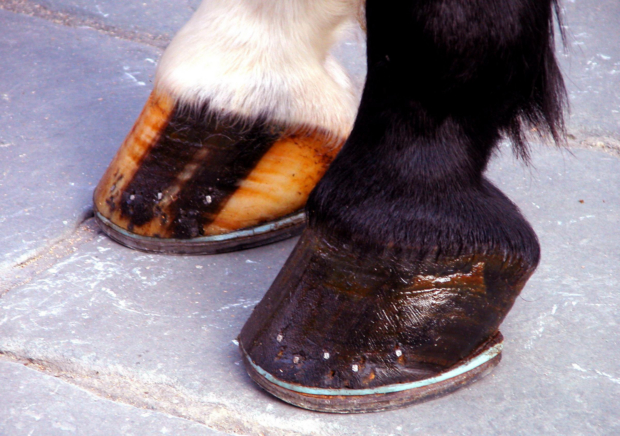
The horses may be itching to get out into the pasture but if it is still muddy don’t give in! At the very least, the horse hooves will tear up the grass and make a real mess of the pasture. When the ground dries out, those ruts could cause injuries to horses later on. Have you ever stepped in a mud puddle and had your boot suctioned off your foot? It is humorous, and a little messy, but for a horse, it can be painful and damaging to the top the hoof. Horses that are permitted to graze a muddy pasture can also develop the dreaded mud fever, cracked hooves, and Equine Dermatophilosis.
No one can prevent spring rains or run-off from melting snow, but horse owners can work around the mud problem. In watering and shelter areas spread a healthy layer of wood chips or crushed gravel. Rain will drain off the surface and help prevent mud, even in the face of traffic from heavy horse hooves. Check gutters around all stables and outbuildings to ensure water drains far away from the horses. Horses and spring mud do not go well together, but good planning can mean they never meet!
Posted by admin @ 10:56 am
Filed under: horse articles, horse care in spring
Tags: hoof care, horse advice, horse care, horse ownership, pasture maintenance, spring horse care tips —
May 24, 2012
Horses Are People Too
It sounds like a cliché, but the World Organization for Animal Health (WOAH) has defined animal welfare in much the same language as the World Health Organization has defined basic human rights. According to the WOAH, the welfare of an animal is good if it is “healthy, comfortable, well nourished, safe, able to express innate behaviour, and not suffering from unpleasant states such as pain, fear or distress.” Food, shelter, safety, and the freedom to be themselves; isn’t that what every human strives for in life?
Considering the history and importance of equine in society, there has been relatively little research conducted on horse behaviour and training. Yet what little has been done shows a strong evidence that horses are intelligent, learning animals that respond very positively to primary positive reinforcement. Unfortunately, just because horses are animals they are usually subjected to negative reinforcement that causes pain, fear or distress, subsequently compromising the overall welfare of the animal.
Back in the last century (1989), the Journal of Animal Science published a report called “A Review of Learning Behaviour in Horses and its Application in Horse Training”. The research presented three main areas of findings: experiences early in a horse’s training and life will affect later learning; horses have long-term memory; long and intense training sessions decrease effective learning in horses. Short training sessions that include positive reinforcement, using food, garner far longer and more successful results than a single long training session.
So, positive reinforcement is the way to successful training, but that doesn’t mean punishment is out of the equation – it just needs to be done correctly. Punishment carried out incorrectly when training horses damages the animal, the lesson, and the relationship with the handler. There are two key points to effective punishment: punish within three seconds of the behaviour and do not escalate. The idea is to make the horse aware of the issue, but not instil fear, avoidance or a defensive response.
If we were to replace all the instances of ‘equine’ or ‘horse’ with ‘person’ or ‘people’, the above three paragraphs would still be relevant. Horses are intelligent, intuitive beings that can and will respond better to positive reinforcement than any other form of training – just like us. Just as we wouldn’t slap a child for crying, it is not appropriate to slap a horse for whinnying. Horses are as sensitive as humans are, and deserve the same humane training methods.
Posted by admin @ 11:20 am
Filed under: horse behavior, horse training
Tags: horse advice, horse behavior, horse care, horse ownership, horse training —
April 23, 2012
No Foot, No Horse – Modern Horse Shoeing
Horses have played a key role in various facets of human history. Having been used in situations and scenarios as varied as world wars, travel and exploration, agriculture and industrialization, horses have been a part of many important developments in the history of the human race as humans have relied upon them for servitude for centuries. While horses are one of the strongest and most resilient species of animal life on earth, they still needed a bit of human ingenuity in order to be able to handle the immense amount of physical labor they were often used for; it became apparent very early on that a horse would have more longevity if it’s hooves could be protected from wearing down prematurely – thus the creation of the horse shoe, born of necessity.
Some of the earliest known civilizations on earth had developed methods of preserving a horse’s hoof. Through various archaeological findings over the years, historians have been able to ascertain some rather crude methodology for hoof protection dating back to first century A.D. – animal hides and plants were woven together to form a type of crude boot that could be tied around a horse’s lower leg and protect their hooves in the process. It is believed these ‘horse boots’ were employed only when the terrain dictated the need for them and they were not permanently affixed. The Romans used a saddle shoe that was quite similar to the sandals worn by most people of the era, right down to the crisscrossing straps used to hold them in place.
Although the exact date of when metal shoes were employed is unknown, it is fairly certain that the practice began in the sixth century. Metal shoes – usually iron – were initially affixed to the hooves of horses to preserve their hooves from damage and premature wear from the great distances they walked while in the service of humans; they were also used to prevent slipping and erosion as horses were often pulling their load or carrying their rider across soft, damp ground. By the 12th century iron was a precious metal in short supply and was used to mint coins as well as to make horse shoes, for this reason it was permissible to pay taxes using horses when necessary.
The first farriers – horse shoe makers – appeared in Europe during the early 13th century, likely brought to Europe by William the Conqueror. Not long after, horse shoes became a large production item and an industry unto themselves. It was also during this time that the main use of horse shoes switched from being used primarily by royalty or cavalry to mainly being used by farmers and other trades. Pre-made horse shoes that were relatively easy to apply were now the norm.
Horse shoe makers became organized in the early 14th century. They became publicly and commonly known as ‘farriers’, a term first used to describe horse shoe makers in a trade manual titled “No foot, No horse”, that was published in 1751. Horse shoeing techniques and materials continued to evolve and eventually led to a technique in which the shoes were heated before application, or “hot shoeing” as it was known.
While horses are primarily a hobby and no longer a relied upon method of transportation or labor in most parts of the world, farriers still exist and horse shoeing is still a usable trade. There are schools that offer farrier courses and it is possible to become a professional in the field. Techniques continue to be improved and materials experimented with – for example, lightweight aluminum shoes were discovered to vastly improve the speed of racehorses; dense rubber was found to be more useful for the more sensitive hooves of trail horses, etc.
Posted by admin @ 8:18 pm
Filed under: farrier work/horse shoeing, horse articles, horse health
Tags: farrier work, hoof care, horse care, horse ownership, horse shoeing —
April 19, 2012
Is Selling Your Horse Online An Option For You?
Selling your horse isn’t always a simple transaction, often it can be very difficult to find a good home – the right home – once you’ve decided to sell it. Taking the time to prepare your horse for sale entails washing and grooming; transportation to a sale barn, consigning it, and then hoping to catch the eye of an interested buyer. All of that requires a lot of time and preparation for an event which carries no guarantee for the seller. It can often be a palpable blow to the owner of the horse when there is no interest or only lower than expected prices are offered. An alternative to the barn sales approach is to use online sellers. Horses for sale on the internet is a relatively new outlet for selling, but it can be effective. Perhaps more effective even than the conventional methods since potential buyers from just about anywhere in the world are able to view your horse, unlike in-person sales which will likely only have buyers from the local vicinity.
Online horse sales clearly offer a lot of positive aspects – the biggest positive is also its most convenient aspect; you don’t have to physically go anywhere – you can sell at the price you want, easily turn away buyers who try to barter or offer lower than desired money and you can communicate with multiple buyers at the same time. Those aren’t the only differences however, not being face to face with a potential buyer requires a different protocol; while less grooming and show preparation is required, you will have to get some pictures prepared for your ad and the actual ad must be enticing enough to generate interest in conjunction with some quality photos. Many of these requirements aren’t necessarily skills that horse breeders may imbue or be familiar with, so there is always the possibility of having to bring in outside help to assist you in your online preparation. Below are some tips for making your transaction and your transition to internet selling a smooth one.
The content in your online ad is vital. While it can be argued that ultimately it is the pictures that will sell your horse, the ad content needs to be top notch. Describe everything about your horse as accurately as possible and try not to skip any details; a potential buyer is more likely to read your ad and follow up with you when interesting details are provided, even if it does look like a massive wall of text. While humor may work as a part of advertising in many arenas, horse sales isn’t one of them – keep the ad factual and state what buyers want to know: pedigree, disposition, previous owners, etc.
The next most important thing after ad content? Photos. Buyers will look at the photo first; if it makes an impression they will likely take the time to read your entire description and possibly contact you if they’re interested. You can enlist a professional photographer if you’d like; if you choose to do it yourself, take photos of anything important (“detail shots” – up close), however the main photo in your ad should be a nice large photo of your horse from the side. Make sure its entire body is visible, nothing should be cropped out. Avoid using post production filters or anything else that will artificially enhance the picture – if your photo is well-lit, you won’t need anything else.
Make sure all of your contact info including email, mobile, etc., is accurate and up to date. If you get a new phone or email account after you’ve posted the ad, update the information as soon as possible to keep your ad current and correct. Always strive to respond to interested buyers as soon as possible and answer inquiries honestly. If you’ve determined the buyer is serious, you can proceed with setting up an appointment for a viewing.
If you’re moving on to a legitimate transaction, make sure any terms and conditions are agreed upon by both parties; you can both take signed copies when you meet in person. You’ll have to schedule when the buyer is going to transfer registration (when required) and you may also want to include a first-rights-to-buy-back option also. Just make sure everything regarding the transaction is laid out in detail, that both you and the seller agree to the terms and that both parties have signed the bill of sale, each receiving a copy for your records.
Posted by admin @ 3:01 pm
Filed under: horse photos, sell a horse
Tags: advertise a horse for sale, horse advice, how to list a horse for sale, how to present a horse you are selling, how to sell a horse, selling a horse, selling a horse online, writing a horse classified ad —
March 14, 2012
How To List A Horse For Sale
Deciding to sell your horse is very difficult, but if the decision is in the best interest of you and the horse, then it is the right course of action. When you took ownership of the horse you made a commitment to its care and well-being. Now that you are selling the animal, you are engaging in a commitment to find the best possible home with reasonable expectations and in a decent amount of time. The first task in listing the horse for sale is sitting down and documenting all the attributes and statistics of the horse. Then be sure to have some good photos taken that will show all the best qualities of the animal and which are suitable for advertising.
When buyers are looking for a horse there are six pieces of information they want before anything else: the age, sex, weight, height, color, and breed (even if it’s a mix). Then it’s time to launch into the training the horse has had and what it’s capable of. Is it an all-round horse, able to engage in different activities with ease and with various riders? If the horse is trained in dressage, be sure to list its highest achievements. With jumping, state the best height accomplishment.
Many people or organizations looking to purchase a horse have a very specific purpose in mind. Therefore it is important to be clear on what sort of rider is best suited to the horse. Is it suitable for children, teens or adults new to riding? Should the horse only be ridden by advanced riders or professionals? A spirited animal that sometimes has a will of its own is definitely not suitable for new riders, just as a stubborn horse isn’t right for lessons or performing.
Be sure to list all special talents, or qualities and accomplishments. For example, is the horse frightened by sudden loud noises or small animals? Does the horse load quietly, or with resistance? Does it endure clipping and shoeing without any trouble, or does the horse have vices? Discuss the qualities that set your horse apart from others, such as an elegant gait, lovely markings, good conditioning and so on. Some of the things you list may seem too negative to put in an advertisement, but keep in mind you are listing all the facts in order to prevent wasting your own time, and that of prospective buyers.
There is much discussion in the equine world on whether to list the asking price in an ad or not. Including a price (even if it indicates o.b.o.) means prospective buyers know exactly where you stand as the seller, and exactly what the perceived value of the horse is. On the other hand, if the horse you are selling is of particularly exceptional lineage, and therefore demands a high price, it may be prudent to keep the price private. Chances are all the information listed in the ad will be enough for experienced equine enthusiasts to know the horse would be very expensive, but just in case, consider including a statement like “serious inquiries only”.
The two most important aspects of your horse for sale advertisement are clear contact information and quality photos. To help prove your ad legitimacy, include your name, email address and your phone number. Join us next time for a discussion on interviewing potential buyers and showing the horse to interested parties.
Posted by admin @ 8:56 pm
Filed under: horse articles, horses for sale, sell a horse
Tags: advertise a horse for sale, how to list a horse for sale, how to present a horse you are selling, how to sell a horse, selling a horse, selling a horse online, writing a horse classified ad —
February 20, 2012
June 20, 2011
Buck Brannaman Knows the Way of the Horse
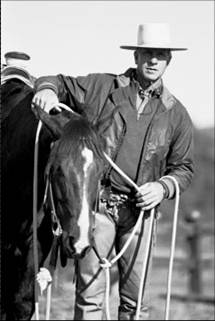
People and horses alike listen when Buck Brannaman has something to say. This former trick rope performer turned cowboy philosopher was the inspiration behind the film and novel, “The Horse Whisperer” and is now the star of first-time-director Cindy Meehl’s documentary, “Buck.”
The story of Buck is one of a man who transcends the abuse of his childhood and learns grace and patience through his love of horses. His role-models, Ray Hunt and Tom Dorrance, were modern pioneers in the philosophy and methods of natural horsemanship, a discipline that Mr. Brennaman soon adopted and began spreading the word about.
For almost three decades Mr. Brennaman has run clinics all over the country teaching working cowboys and other horse devotees that riding a horse like a dance – it is a combination of wooing, leading and mutual respect. “When you get to the point where a horse accepts you, trusts you, it can change you as a person and change the way you relate to other people, not just horses.”
The film, “Buck” was a made to inspire people to make changes to the way they deal with both horses and life’s challenges. It teaches people to communicate using leadership and sensitivity rather than fear and intimidation.
Posted by admin @ 8:17 pm
Filed under: horse movies, horse quotes, horse training
Tags: horse movies, horse trainers, horse training, horse videos —
June 1, 2011
Equine Health Advisories in the News
The Oregon Parks and Recreation Department advises horse owners to be aware of a recent outbreak in the Northwest of Equine Herpes Virus and to assess the health of their own horses before transporting horses or attending shows and rodeos where the disease may be spread. There are no travel restrictions to-date.
Full story
EHV-1 is a common strain of a DNA virus that occurs in horse populations worldwide, a respiratory disease that can cause a pregnant mare to lose her foal, according to the American Association of Equine Practitioners.
Prevention is the key to stopping this disease from spreading, so observe these tips to help protect your own horses:
• Ask your local veterinarian to see if there are reported cases in your area, or in the areas you plan to travel to.
• Keep your horses away from other horses, if possible.
• Don’t share tack, barn supplies, or brushes with other people or use on horses other than your own.
• Keep everything as clean as possible. If you frequently handle other horses for training or farrier work, wash your hands and clothing before working with your own horses.
• If you have attended a show or had your horse in contact with other horses, keep your horse away from your other horses for 10 days after returning back home, and take the horse’s temperature twice daily.
• If you’re planning to travel out of state with horses, call ahead and ask a veterinarian in that state if there are any reported cases in your destination area.
Also, horse owners in the Midwest are being advised to be on the lookout for any symptoms of the West Nile Virus. Recent heavy rains and flooding in this region (see map) are creating large bodies of standing water that are ideal breeding grounds for mosquitoes that potentially carry the disease.
Common symptoms of the disease in horses include (but are not limited to) loss of appetite, weakness/paralysis of hind limbs, muzzle twitching, impaired vision, loss of coordination, head pressing, aimless wandering, convulsions, inability to swallow, hyper-excitability and coma. Any signs of this disease need to be reported to a licensed veterinarian immediately.
Although vaccination does not prevent horses from contracting the WNV it is a key component in allowing them to fully recover if infected. Primary vaccination of horses involves administration of 2 doses of vaccine 3 to 6 weeks apart. In endemic areas, boosters are required semi-annually or more frequently (every 4 months), depending on risk. Annual revaccination in low-risk areas is best completed in the spring, prior to the onset of peak insect vector season.
By practicing effective mosquito control in your own backyard you can help decrease the potential for spreading the WNV. Regular cleaning of watering troughs, is essential for prevention. Rain barrels and other standing pools of water can be treated with nontoxic, commercially available larvacide dunks that kill mosquito larvae. These can be found at most garden centers.
For more information about West Nile Virus go to this link.
Posted by admin @ 11:38 am
Filed under: horse health, horse illnesses
Tags: EHV virus, horse vaccinations, veterinarian advice, West Nile Virus —
January 27, 2011
White T-Shirts and Flannel
I recently posted an entry discussing Cowboy hats, who wears them, and why. I admitted that I don’t wear one but sure wish I did—so I could pass as a “real” cowboy. I will probably always come up short on that look because I’ll lack the hat, but I think I can pass from the waist down anyways!
If I had my way, I’d wear jeans and a white t-shirt every day of my life. In the winter, I’d have a pullover sweatshirt or flannel shirt on for added warmth, but rest assured the white t-shirt would be layered underneath.
I literally have a closet full and dresser drawers full of nice shirts of all kinds (including brand new white t’s) that I’ve never worn because I can’t give up my broken-in white t-shirts and button down flannel shirts. I generally wear the shirts until they are more holes than fabric, and at that point, my wife subtly throws them out or makes rags out of them. But I always notice when one is gone and chastise her for the theft and subsequent wasting of a perfectly good shirt—I bought the last white tee she threw out, in a package of three, on vacation in 2002, and it had plenty of life left in it! I believe I still have the other two.
As a side note—when you buy a flannel shirt, it’s my experience that you definitely get what you pay for. The best kinds get that broken-in, “worn” look, but still hold on for several years. To me, shirts are like tennis shoes….if they’re brand new, they feel conspicuous and fake. I see a few cowboys wearing starched shirts and ironed jeans, but to me there’s nothing more unreal than a drug store cowboy look. Flannel shirts and white t’s are the most comfortable thing in the world, and I’m a cowboy who believes in comfort.
Posted by admin @ 8:04 pm
Filed under: western wear
Tags: cowboy apparel, flannel shirt, western wear —
January 25, 2011
On Cowboy Hats
So what’s your opinion on cowboy hats? Are you a guy or gal who wears one only occasionally for western events or is it part of your permanent, everyday attire, something as necessary as your pants or shirt? Do you think anyone and everyone should wear one, or just the actual cowboys?
My wife grew up in cattle and ranch country and she is more accustomed to seeing “real” cowboys wearing cowboy hats. Her uncle has been a rancher his entire life, and I can’t imagine him without a cowboy hat. I don’t think he’d look like himself at all without it! Her dad, on the other hand, is also a rancher and horseman, but he can usually be seen wearing a Pioneer seed corn cap whenever he’s horseback, and he saves his hat for Sunday-go-to-meetin’ days or special events.
I grew up in farming country and when I see someone wearing a cowboy hat, I feel like they look out of place. Further adding to the mis-placed look is that you rarely see the person that wears them in anything but a really nice Stetson or some other expensive looking hat. It makes it look like that hat is an accessory and statement, rather than an old beat up hat that seems to be as much tool as clothing accessory. In fact, just about the only people around here who wear them seem to be auctioneers, cattle buyers, and wanna-be cowboys who may own a horse or two, but they rarely ride them and don’t own any cows at all—which leads to an inside joke among me and my brothers, “Never trust anybody with a cowboy hat.”
Having said that, I’ll admit, when I was five years old our little town celebrated its centennial and there was a bingo parlor set up in the city park. My grandpa took me along with him to play, and I won the first game. Well, despite my grandmother’s protests, I chose a big straw cowboy hat for my prize! It was white, with a great big brown and red feather on the front of the hat and I cherished it for quite awhile.
Even now, I secretly wish I had a cowboy hat. I wish I had two actually—an old, beat up dirty one that shows I’m a “real” cowboy, and then a nice “goin-to-town” one that cost more than my horse did. Any time I’m at a western store, I make sure no one is watching and I put one on and instantly feel sheepish. So I regretfully put it back and move on. The look probably just doesn’t suit me. Besides…I don’t want people thinking I’m an auctioneer!
Posted by admin @ 2:55 pm
Filed under: western wear
Tags: cowboy apparel, cowboy hats, western wear —